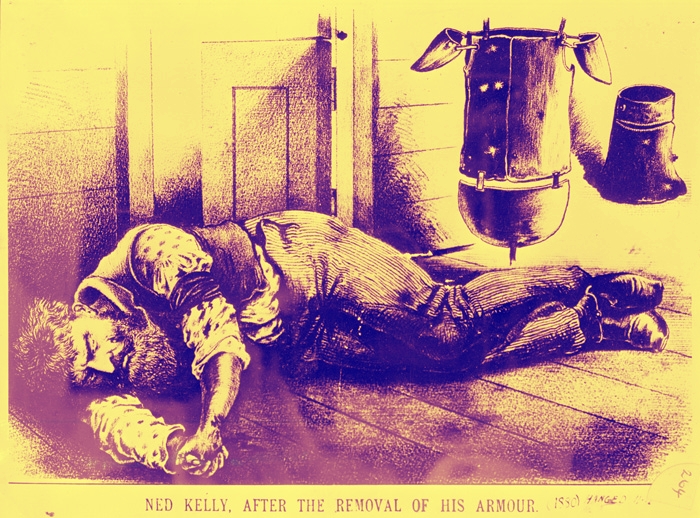
When Kelly lay on the floor in the railway van Inspector Sadlier appealed to him to send some signal to his comrades and spare further bloodshed, but he replied, “I cannot. They will never give up, and you cannot take them alive.”
 Glenrowan
When Kelly lay on the floor in the railway van Inspector Sadlier appealed to him to send some signal to his comrades and spare further bloodshed, but he replied, “I cannot. They will never give up, and you cannot take them alive.”
“I do not pretend that I have led a blameless life, or that one fault justifies another ; but the public in judging a case like mine should remember that the darkest life may have a bright side, and that after the worst has been said against a man he may, if he has told his story, in his own rough way, that, will perhaps lead them to reverse the bent of their thoughts against him and find as many excuses for him as he would plead for himself.”

“On Friday morning, by virtue of an order from the Chief Secretary, Mr. Charles Cox, the publican of Jerilderie in whose hotel the prisoners were confined when the bank at that place was stuck up by the Kelly gang, had an interview with the surviving outlaw.”

The following is extracted from the 1881 Royal Commission into the police force, where the newly retired Captain Standish gave an account of his involvement in the Kelly pursuit. The extracts contain information directly relevant to the Glenrowan siege and the police that were placed to protect Aaron Sherritt.

Where did the idea for the novel originate? What makes the story of the Glenrowan siege so compelling?
 Glenrowan